The Tantric New Year: Flashes of Love • Connection • Joy • Celebration • Renewal
The Mill

A path of transformation and awakening to shine
We offer internships, workshops, and coaching sessions based on solo, partner, and group exercises, with full respect for oneself and others. You will experience creative and inspiring practices using breath, sound, movement, meditation, and other approaches such as bioenergy, systemic constellations, or tantric and sacred touch. To find out more: tantramoursc@gmail.com
Sabryna : 06 63 17 71 80 – ShivaChris : 06 76 05 01 87
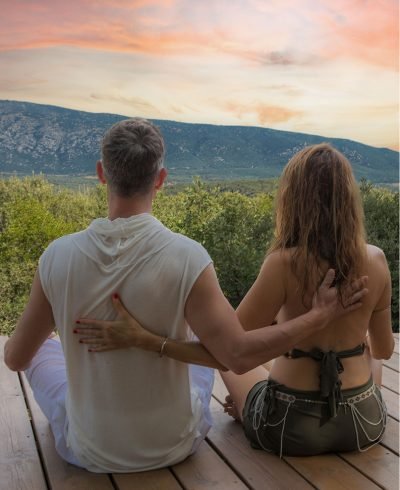
Physical, mental, emotional and spiritual,
The benefits of Tantra are powerful
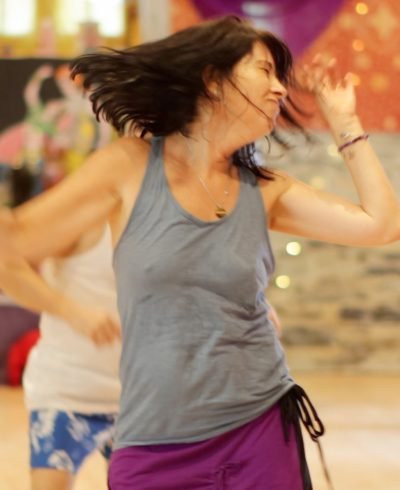
Our approach derives from tantra traditions originating from Kashmiri Shaivism and Buddhist Vajrayana.
We are opening it up to neo-Tantric practices which include psychotherapeutic and bioenergetic approaches.
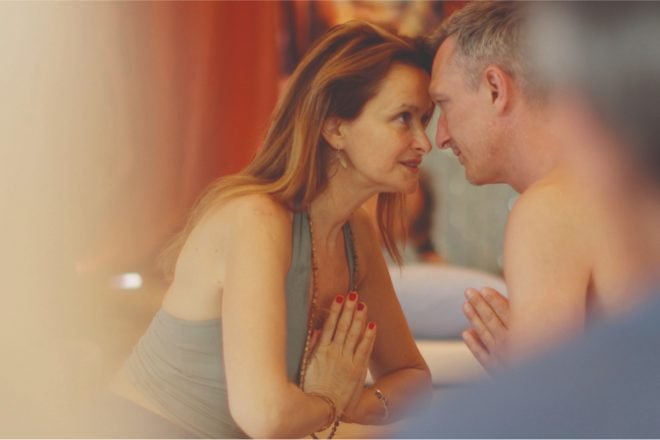
For us, tantric practice is transformation through Love to exit the illusion of separation and taste the state of Unity.

A Tantra workshop with TantrÂmour is an invitation to slow down, to return to listening to our body, our emotions and our feelings, to explore a more conscious relationship with ourselves, with others and with the world. Each workshop has its own thematic focus, but all rely on an experiential approach to Tantra, in which presence, respect for each other’s rhythm and freedom of participation take center stage.
The days alternate between times of meditation, movement, breathing, dance, bodily and vocal expression, as well as relational explorations offered individually, in pairs or in groups. Depending on the theme of the stage, certain practices may also involve conscious touch, rituals or other approaches that promote listening and bodily awareness. It is not about achieving an exercise or reaching a particular state, but about experiencing what arises with curiosity and kindness.
The practices are accompanied by Sabryna and ShivaChris, who ensure a clear framework based on consent, confidentiality and respect for personal boundaries. Everyone remains free to participate, adapt a proposal or not to carry it out. A pre-registration exchange also allows for getting to know each other, answering questions and verifying that the internship meets the person’s expectations.
Beyond the practices themselves, a Tantra course is also a space to take a step back from our habitual ways of being, to explore how we can enter into relationships more fully and discover how to find more presence in our daily lives. The intention is not to withdraw from the world, but to learn to inhabit it more fully.
Tantra is often associated with sexuality, sometimes even reduced to a set of sexual practices. However, this view represents only a very limited part of what Tantra is. In our approach, it is first and foremost a path of consciousness, an invitation to fully encounter life through the body, emotions, sensations, relationship, and presence within oneself.
Sexuality is part of the human experience and, in this capacity, can be welcomed as a dimension of our vitality. Tantra invites us to explore this energy of life, not necessarily in its sexual expression, but also through breathing, movement, creativity, sensitivity, openness of heart, and the quality of our presence. Sensuality, intimacy, and sexuality are not synonymous: it is possible to experience a profound experience of connection with oneself or another without it being sexual.
There are no sexual relations in our Tantra courses. The proposed practices do not aim at sexual performance or the pursuit of an orgasm. Some explorations may invite the exploration of one’s sensuality, one’s relationship with desire, intimacy, or conscious touch, always within an explicit framework that respects each person’s consent and boundaries.
For us, Tantra is not about seeking an extraordinary experience or pushing our limits at all costs. It rather teaches us to listen to what is alive within us, to recognize our impulses as our resistances, and to enter into a relationship with more awareness, freedom, and responsibility.
It is in this perspective that we transmit Tantra at TantrÂmour: not as a practice centered on sexuality, but as an art of living, of feeling and fully inhabiting the world.
It is entirely possible to participate in a Tantra course alone, as a couple, or with your life partner. At TantrÂmour, we welcome both individuals who wish to discover Tantra individually and couples who wish to explore another way of being in relationship together. There is no need to be in a couple or to have a partner in order to fully experience the experience of a course.
Coming alone to a Tantra workshop It can be an opportunity to offer oneself a space for self-exploration, to better understand one’s needs, limits, and desires, while also discovering one’s own way of interacting with others. The practices can be experienced individually, in pairs, or in a group, in an environment where everyone remains free to make their own choices. It is not necessary to come accompanied to participate in the proposed explorations.
Participating in a Tantra workshop as a couple It allows for sharing a common experience, cultivating presence, listening, and communication, but also for bringing a new perspective to the relationship. Tantra can invite each person to recognize their own needs while welcoming those of their partner, without seeking to transform the other or to meet a particular expectation.
During two-person practices, couples who wish to experience things together are given priority in choosing their partner. They are, however, free to participate separately if they wish, in accordance with the framework and agreements established between them.
There is no better way to discover Tantra. Some people start alone, then return with their partner; others first experience this experience as a couple before continuing individually. The important thing is that the approach is freely chosen and corresponds to what is right for each person at this point in their journey.
Whether you come alone or with two, one Tantra training course is first and foremost an invitation to deepen the relationship with oneself, to meet the other with greater awareness, authenticity and freedom.
Tantra can offer the couple a space to slow down, break out of the automatisms of everyday life, and regain a quality of presence that sometimes gets sidelined over the years. In a loving relationship, it happens that habits, expectations, misunderstandings, or personal wounds gradually take more space than genuine listening and encounter. A couple’s Tantra workshop invites participants to explore these mechanisms, not to appoint a leader or seek to change the other, but to develop a finer awareness of what is at play in the relationship.
Through breathing, movement, conscious touch, time spent together, and relational practices, partners can discover other ways to communicate, express their needs, recognize their limits, and welcome their differences. Tantra invites us to cultivate an intimacy that is not based solely on sexuality but also on trust, vulnerability, tenderness, presence, and the freedom to be oneself.
A Tantra course can also be enriching for a couple going through difficulties., Provided that both partners wish to engage freely in this process and that the proposed framework corresponds to their situation. Some explorations can help to become aware of repetitive patterns, difficulties in setting boundaries, or needs that have not found their place in the relationship. However, Tantra is not a couple therapy and does not replace specialized support when it is needed.
It is also important to remember that Tantra is not aimed at maintaining a relationship at all costs. It can accompany a better understanding of oneself and others, without assuming the direction the couple will take. Sometimes this new awareness nourishes the relationship and allows it to evolve; sometimes it invites each person to recognize their aspirations and choices more clearly.
At TantrÂmour, we believe that the quality of a relationship is not measured by the fusion between two people, but by their ability to meet themselves in their uniqueness. Tantra thus invites us to love without losing ourselves, to welcome the other without seeking to possess them, and to build a relationship in which freedom, responsibility, and awareness can grow together.
No, Nudity is not mandatory during a Tantra course with TantrÂmour. Each person is free to remain dressed, to adapt a proposal, or to choose not to participate in a practice. Respect for the body, the rhythm, and the limits of each individual constitute an essential foundation of our approach. There is never a need to undress in order to experience a profound experience of Tantra.
Certain Tantric practices can invite us to explore our relationship with the body, modesty, vulnerability, or the other. Depending on the theme of the stage, proposals involving partial or complete nudity may sometimes be considered. When they exist, they are presented clearly, and everyone remains entirely free to participate or not, without having to justify their decision. Nudity is not an objective to be achieved or a sign of confidence, surrender, or commitment to the Tantric path.
In our Tantra courses, we pay special attention to consent. It is never assumed; it must be expressed freely and can be withdrawn at any time. Everyone is invited to acknowledge their feelings, listen to their limits, and communicate them without pressure to go beyond what seems right to them. Respect for a refusal is an integral part of the practice.
Tantra is not about going beyond one’s limits at all costs, but about developing a more conscious and respectful relationship with oneself. For some people, this may mean daring to try a new experience; for others, learning to say no, to slow down, or to preserve their privacy. These different experiences have the same value.
At TantrÂmour, we want everyone to be able to explore Tantra in a welcoming environment, where freedom of choice, trust, and mutual respect allow us to meet each other with greater authenticity. It is quite possible to fully participate in a Tantra workshop without ever being naked.
Yes, it is entirely possible to discover Tantra without any previous experience. At TantrÂmour, our beginner-friendly courses welcome people who wish to explore this path for the first time, whether they have already practiced meditation, yoga, or personal development, or whether they are completely new to this universe. It is not necessary to know the Tantric traditions, to master specific techniques, or to have previously participated in a course to begin.
A first Tantra course is first and foremost an experience of self-discovery through the body, breathing, movement, emotions, and relationships with others. The practices are offered and accompanied gradually, in an environment that invites everyone to become aware of their feelings, needs, and limitations. It is not about mastering an exercise, feeling comfortable with all the suggestions, or experiencing a particular experience; it is about exploring what comes up with curiosity and self-respect.
It is natural to feel apprehension before a first Tantra class, especially when you don’t know exactly what to expect. Some people wonder if they will have to undress, touch other participants, share intimate aspects of their lives, or overcome their inhibitions. In our approach, none of these experiences are mandatory. Each person retains their freedom to participate, can adapt a practice, or choose not to participate, without having to justify themselves.
The workshops are accompanied by Sabryna and ShivaChris, who pay special attention to the quality of the environment, consent, and relational safety. Before registration, an exchange allows for questions to be answered, the spirit of the workshop to be presented, and to verify that it meets everyone’s expectations and situation.
Discovering Tantra is not about learning to become someone else. It may be about starting to meet ourselves more fully, listening to what is alive within ourselves and developing a presence that can gradually find its place in relationships and in everyday life.
For a first Tantra course, we invite you to check out our program to choose a proposal suited to your experience and aspirations.
A Tantra practice is a space of exploration and experience that invites us to develop a more conscious presence within ourselves, our bodies, our emotions, and our way of interacting with the world. Derived from ancient spiritual traditions and transmitted today in various forms, Tantra proposes not to separate the body from the consciousness, the inner life from the daily life, nor the spirituality from the human experience. It invites us to embrace existence in all its dimensions, rather than seeking to extract ourselves from it.
At TantrÂmour, we approach Tantra as a living path, in which direct experience holds a central place. Through meditation, breathing, movement, dance, conscious touch, energy practices, and relational explorations, everyone is invited to observe their habits, recognize their feelings, and encounter what presents itself to them with greater presence. These proposals are not aimed at achieving an ideal state, but at refining our ability to listen, feel, and choose consciously.
The possible benefits of a Tantra course They are numerous and depend on the individual’s experience. Some find it an opportunity to slow down and reconnect with their bodily sensations; others discover a more authentic way to express their emotions, needs, or limitations. Tantra can also foster a better understanding of their relational functioning, greater quality of listening, and a more peaceful relationship with their body. However, these are not guaranteed results or a path that is identical for everyone.
Beyond practices, Tantra invites us to question our way of inhabiting the world: how are we present to what we experience? What place do we give to our feelings, our impulses, our contradictions? How can we meet the other without losing ourselves, love without possessing, act without cutting ourselves off from our sensitivity? These questions find their extension well after the workshop, in our relationships, our choices, and our daily lives.
A Tantra course is therefore not a parenthesis intended to escape the difficulties of life, but an opportunity to explore other ways of encountering them. At TantrÂmour, we like to remind ourselves of this fundamental intention: Tantra is about fully inhabiting the world, not escaping it.
In our Tantra workshops, consent, respect for personal boundaries, and freedom of participation are at the heart of our support. We believe that a truly conscious Tantra experience can only be achieved if everyone has the freedom to choose what they wish to experience, share, or explore. Consent is therefore not simply a rule to be followed; it is an integral part of the path we offer.
Before the practices, we take the time to set a clear framework and explain the proposals. Each participant is invited to listen to their feelings, recognize their needs, and express their limits. It is always possible to refuse a practice, adapt it, ask for a break, or interrupt an interaction without having to justify it. An agreement given at one point does not apply to the future: consent must remain free, informed, specific, and revocable at any time.
This attention is particularly important in relational explorations or practices of conscious touch. Learning to ask rather than assume, to accept a rejection without taking it personally, to express a genuine yes rather than a mere compliance, or to recognize when a proposal does not suit us, are all experiences that can transform our way of entering into relationships. We also invite everyone to respect the privacy of the shared experiences and the privacy of the other participants.
In our approach to Tantra, exceeding one’s limits is never an objective in itself. A transformation can sometimes arise from a new experience, but it can also emerge from recognizing discomfort, slowing down, setting a limit, or choosing not to participate. We value these different possibilities equally, without hierarchy between them.
Sabryna and ShivaChris accompany the practices and ensure that the collective framework is respected, while remaining attentive to individual situations. We encourage participants to report any difficulties or interactions that they feel are not respectful, so that they can be addressed and taken into account.
Beyond the internship, this exploration of consent invites us to question our way of living relationships in everyday life: do we know how to recognize what we truly desire? Do we dare to say no without feeling guilty? Are we able to accept the limits of the other without trying to change them? For us, Tantra takes on its full meaning when it helps us develop this quality of presence, listening, and responsibility, both towards ourselves and towards others.
No, it is never mandatory to touch another person or to accept being touched during a Tantra workshop with TantrÂmour. Physical contact can be part of certain explorations, but it is not a requirement for participation or an objective to be achieved. Each person remains free to choose what suits them, based on their feelings, needs, and limitations at the moment.
In our approach, Tantra invites us to develop a more conscious presence in the body and in relationships. This exploration can take many forms: meditation, breathing, movement, dance, gaze, speech, listening, or simply the silent presence of the other. It is thus entirely possible to experience a profound experience of connection without physical contact.
When conscious touch practices are offered, their intention and the process are explained beforehand. Participants are invited to clearly express their agreements and limits, to ask for their partner’s consent, and to remain attentive to what evolves during the experience. An agreement can be modified or withdrawn at any time, without justification. Refusing contact, requesting an adjustment, or interrupting a practice is always legitimate.
Conscious touch is not about doing something to the other person; it is about developing a quality of presence in the encounter. It invites us to distinguish what we want to give from what the other person really desires to receive, to recognize our own expectations and to respect each other’s autonomy. Sometimes, the most important experience is not in touching or being touched, but in discovering that we can freely express a yes, a no, or a hesitation, and be respected in that choice.
At TantrÂmour, we believe that freedom of participation is essential to any authentic exploration. It is not necessary to accept physical contact to discover Tantra, participate in a course, or deepen your relationship with yourself and others.
TantrÂmour organizes Tantra courses in France, mainly in three regions: in Occitania, near Montpellier, in Provence, at the gates of the Luberon, and in Alsace, in the heart of a protected natural environment. These places have been chosen for their atmosphere, their quality of hospitality, and their ability to offer a space conducive to inner exploration, encounter, and collective life.
Near Montpellier, at the Hameau de l’Étoile, We offer several Tantra workshops in a natural setting, north of Montpellier. This place holds a special place in our history: it is here that Sabryna discovered Tantra and followed a significant part of her training journey, that ShivaChris experienced her first tantric experiences, and where our paths crossed. For several years, we have been accompanying groups there and also organizing the TantrÂmour Festival. Hameau de l’Étoile offers a spacious setting, with practice spaces, accommodations, and a swimming pool, allowing for alternating periods of exploration and rest.
In Provence, in the Vaucluse, near the Luberon, We also welcome Tantra courses At La Minoterie. This more intimate place, which we privatize for our group, offers a warm, almost family atmosphere. It allows you to experience the experience in a more intimate setting, conducive to closeness, listening, and quality interactions. It is a particularly interesting destination for those looking for a Tantra training course in Provence or in the Luberon.
In Alsace, at the Jardins du Nideck, At Tantra in the Forest, we offer Tantra courses in a forest, river and nature environment. This place holds a special significance for ShivaChris, whose roots are in this region. Its peaceful atmosphere, its practice spaces and sauna invite you to slow down and rediscover a sensitive relationship with the body and the elements. It also allows people living in Alsace and the Grand Est to discover our approach to Tantra without necessarily traveling across France.
No matter the location, our courses are based on the same fundamental principles: an experiential approach to Tantra, attentive guidance, respect for consent and personal boundaries, and an invitation to link the discoveries made during the course with everyday life.
To discover the upcoming dates, themes and locations of our Tantra courses in France, discover our dedicated article or check out our Tantramour program.
Choosing a Tantra course often starts with a simple question: what is it that calls me in this process? Some people feel the need to slow down, to find a more sensitive relationship with their body, or to better understand their emotions. Others want to explore how they can enter into relationships, deepen their ability to love, find vitality, or simply discover an approach to Tantra that speaks to them. There is no need to have a specific goal for participating in a course, but taking the time to listen to what motivates this drive can help choose an appropriate experience.
At TantrÂmour, we offer various Tantra workshops, each built around a specific intention. Some invite you to explore the connections between the body, the heart, consciousness, and energy, while others focus more on the relationship with oneself, with others, and with life, or on the quality of presence in touch. These topics do not constitute levels to be successively mastered; they represent different doorways to a single exploration: that of a more conscious presence in the human experience.
Previous experience is not necessarily a determining criterion. A person who discovers Tantra may feel called to a particular theme, while an experienced participant may wish to return to fundamental explorations. However, it remains important to consult the presentation of each course to verify whether it is open to beginners or whether it requires prior experience.
The choice of location, duration, and format can also be important. A residential internship of several days allows you to take a step back from everyday life and gradually immerse yourself in the experience. The atmosphere of the place, the size of the group, and the way practices are facilitated can also contribute to making you feel comfortable enough to explore at your own pace.
Finally, we believe that it is essential to research the people who accompany the course, their approach to Tantra, their way of approaching consent and the place given to individual freedom. A Tantra course should not require giving up one’s own discernment or going beyond one’s limits to meet the expectations of a group or a teacher.
At TantrÂmour, we prioritize a living and experiential approach to Tantra, in which everyone is invited to remain attentive to what is right for them. If you are undecided between several courses, we invite you to Discover our program or to contact us to discuss your expectations and choose the proposal that best suits you.
The price of a Tantra course with TantrÂmour varies depending on its duration, its theme, and the location where it is organized. To allow everyone to understand precisely the cost of their stay, we generally distinguish two elements: the pedagogical fees, corresponding to the accompaniment and the practices offered, and the accommodation and meal expenses, related to the on-site reception.
The tuition fee It includes all the workshops and practices accompanied by Sabryna and ShivaChris during the course. It also takes into account the preparation of the program, the implementation of the collective framework, and the accompaniment of the participants throughout the experience. Each course is designed as a coherent journey, with a progression that leaves room for exploration, integration, and the rhythm of the group.
Accommodation and catering costs They depend on the place of accommodation and the offered formulas. Our residential camps take place in spaces chosen for their natural environment, atmosphere, and ability to accommodate the group in good conditions. Depending on the location, different accommodation options may be available, with rates adapted to the type of room or accommodation chosen.
Participating in a Tantra residential retreat also means offering yourself time away from everyday life, in a setting that allows you to fully experience the practices, encounters, and moments of rest. This immersion is part of the experience: it fosters continuity between the workshops and the times of collective life, without the need to seek a particular performance or result.
For each internship, we specify the fees, the registration procedures, and the accommodation conditions on its presentation page. We invite you to consult our Tantra training program to discover the upcoming dates and practical information, or contact us if you would like to be guided in your choice.
Participating in one’s first Tantra course can arouse curiosity, enthusiasm, but also questions or certain apprehensions. How will the practices unfold? Will I feel comfortable in the group? Will I have to talk about myself, touch other people, or experience things I am not used to? These questions are natural, and it is not necessary to have all of them resolved before coming. Perhaps the most important preparation is to allow oneself to discover, without trying to anticipate or control what will be experienced.
No special physical, spiritual, or meditative preparation is necessary to participate in a course open to beginners. It is not necessary to practice yoga, know the tantric traditions, or have already participated in personal development workshops. Our proposals are based first and foremost on direct experience: feeling your body, observing your breath, welcoming your emotions, exploring movement, presence, and relationships with others. Everyone is invited to move forward at their own pace, with their possibilities and limitations.
Before the workshop, we encourage you to take a moment to ask yourself what makes you want to experience this experience. Perhaps you feel the need to slow down, find renewed vitality, deepen your relationship with yourself, or discover a different way to connect. There is no need to formulate a specific intention or wait for a particular transformation to occur. Sometimes, simply coming with curiosity and an openness to welcome the unexpected already constitutes a starting point.
In practical terms, we provide you with the necessary information before your arrival: schedules, the address of the place, accommodation arrangements and things to bring. We generally recommend comfortable clothing suitable for movement and relaxation, as well as some personal items to help you feel comfortable during your stay. Any specific instructions are specified according to the program of the course.
We also invite each participant to familiarize themselves with the proposed framework, particularly regarding consent, privacy, and respect for personal boundaries. There is nothing to prove, no performance to achieve and no obligation to participate in a practice that is not suitable for you. You can express your needs, ask questions, request an adjustment, or choose to remain under observation when possible.
Finally, we encourage you, as far as possible, to leave some space around the stage, especially after your return. Some experiences can trigger emotions, insights, or simply a need for rest. Taking the time to return to your daily routine without haste can help you to accept what has been experienced and gradually perceive the resonance of that experience in your life.
At TantrÂmour, we do not believe that one has to become someone else in order to enter into a Tantric practice. **Rather, it is about learning to more consciously encounter what is already there, within our body, our heart, and our way of being in the world.
Tantra is a set of spiritual and philosophical traditions that developed primarily in India, starting from the first millennium of our era, before spreading, among other places, to the Himalayas and Tibet. It does not denote a single doctrine, but different paths, stemming from Hindu and Buddhist traditions in particular, which offer teachings and practices aimed at transforming our relationship with consciousness, the body, and existence.
In some traditions, such as the non-duelling Shaivism of Kashmir, the world is not seen as an obstacle to spiritual realization, but as an expression of consciousness itself. The body, sensations, emotions, and ordinary experiences can thus become vehicles for recognition and awakening. Other tantric traditions place greater emphasis on rituals, mantras, visualizations, initiations, or meditation practices transmitted within specific lineages. Traditional Tantra therefore encompasses a wide variety of approaches, which cannot be summarized into a single definition.
Neo-tantra, or contemporary tantra, developed primarily in the 20th century., In meeting certain tantric inspirations, Western bodily approaches, humanistic psychology, and personal transformation movements. He often places great emphasis on direct experience, breathing, movement, dance, emotional expression, relationship, and conscious touch. According to schools and teachers, practices and intentions can be very different.
One of the most common confusions involves associating Tantra, and particularly neo-Tantra, with sexuality. While some contemporary approaches explore intimacy, sensuality, or sexual energy, these are not at the heart of all Tantric practices. The historical traditions themselves are much broader in scope than this dimension, and ritual sexual practices do not always have the same place in them.
At TantrÂmour, our approach is rooted in the field of contemporary Tantra, nourished by various spiritual, meditative, bodily, and relational inspirations. We are particularly sensitive to the non-dual vision of Kashmir Shaivism, which invites us to recognize the sacred within the very human experience, without seeking to separate ourselves from the world or reject what passes through us. However, we do not claim to convey the initiatory teachings of a particular traditional lineage: we offer a space for experiential exploration adapted to contemporary life.
Our retreats invite us to develop a more conscious presence within ourselves, to meet our emotions, to listen to our body, to explore the relationship, and to cultivate an attentiveness quality in the simplest of experiences. Meditation, movement, breathing, meeting, and sometimes conscious touch become opportunities to observe our functioning, to recognize our limits, and to broaden our way of inhabiting the living world.
For us, the question is not to oppose tradition and modernity, but to remain aware of what we transmit, what we adapt, and what we do not claim to teach. Tantra is not reduced to a technique of well-being or a search for extraordinary experiences. It can also invite us to encounter more deeply the reality of our existence, in its bodily, emotional, relational, and spiritual dimensions.
It is in this spirit that we accompany the TantrÂmour courses: not to learn to escape the world, but to explore how to inhabit it with greater presence, awareness, and freedom.
To participate in a Tantra workshop with TantrÂmour, we first invite you to consult our program to discover the upcoming dates, the proposed themes, and the venues. Each workshop has its own intention and approach, with explorations that may focus more on the relationship with the body, consciousness, energy, connection to others, or conscious touch.
On the presentation page of each course, you will find the essential information to prepare your participation: dates, location, duration, program content, tuition fees, as well as accommodation and catering arrangements. We encourage you to take the time to read this presentation to assess whether the proposal meets your expectations and your current availability.
If you discover Tantra, if you are undecided between several courses or if you have specific questions, we are available to discuss them with you before you sign up. This exchange allows us to better understand your approach, answer your questions, and provide you with the necessary information regarding the proposed practices, the framework of the internship, and the conditions of participation. It is not intended to assess your level, but to help you make an informed choice.
Registration then takes place according to the procedures indicated on the page of the chosen course. Information regarding the regulations, accommodation, and the organization of the stay is provided to you during the booking process. Before your arrival, you will also receive the necessary practical information to prepare for your arrival in the best possible conditions.
You can participate in our Tantra workshops alone or in pairs, whether you are in the process of discovering Tantra or have already had some experience with Tantric practices, subject to any prerequisites specific to each workshop. We welcome people with diverse backgrounds and sensibilities, with special attention being paid to respect for each individual, consent, and freedom of participation.
We invite you to discover lUpcoming TantrÂmour workshops and to Contact us if you would like to exchange with Sabryna and ShivaChris before committing to a relationship. We will be happy to answer your questions and assist you in this first step.
If you can become your own being, if you can blossom within your inner nature…
only then can you taste ecstasy, a peace that cannot be expressed in words Osho