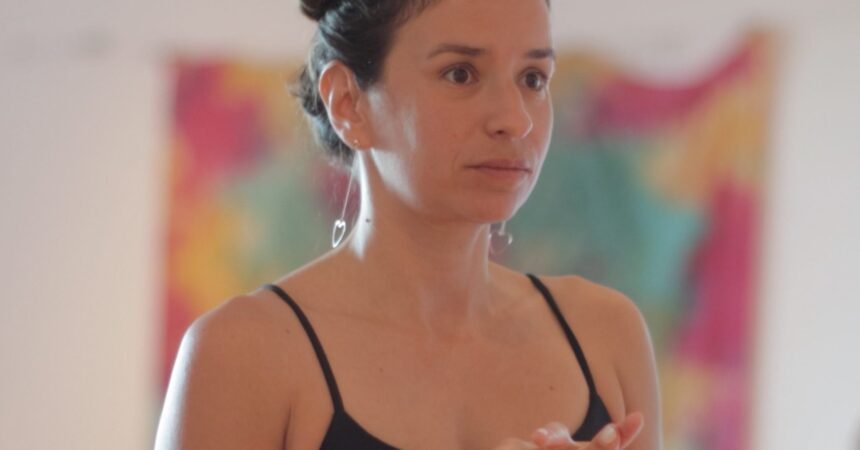
A spiritual path should not teach us to feel reality less, but to encounter it with greater awareness.
The relationship between spirituality and emotions raises an essential question: should a path of consciousness lead us to overcome what we feel, or should it teach us to experience it more fully?
In this article
When spirituality becomes an injunction to do well
Being on a spiritual path does not mean no longer being afraid, no longer feeling anger, no longer doubting or being shaken by what happens in our lives and in the world. Yet, certain representations of spirituality sometimes seem to invite us to become beings to whom nothing could ever reach, as if inner evolution were gradually to erase our emotions, our contradictions, and our vulnerabilities.
We need to be at peace, radiate love, welcome others, forgive, remain in love, and learn to see every difficulty as a lesson. We need to know how to take a step back, not let ourselves be affected by events, and quickly transform any painful experience into an opportunity for growth.
These aspirations can have their beauty and their validity. But when they become permanent demands, they risk distancing us from what we are truly experiencing. We can then begin to judge certain emotions as unworthy of our path, to blame ourselves for our reactions, or to hide our suffering behind an appearance of serenity.
A question then deserves to be asked: What would it be useful to open our consciousness to if it were to become less sensitive to reality?
We distrust a spirituality that would function as an anesthesia, not because inner peace does not exist or does not deserve to be cultivated, but because peace should not become a way of no longer feeling.
Spirituality and emotions: inner peace is not the absence of feelings
We sometimes confuse peace with calmness, detachment with indifference, and awareness with the ability to no longer be affected by events. Yet, a person deeply engaged in an inner journey can continue to experience periods of sadness, fear, anger, or confusion.
We can sincerely love someone and feel anger towards them. We can intellectually understand a situation and still need time for our body, emotions, and sensitivity to integrate it. We can be aware of our defense mechanisms and continue, in some circumstances, to see them manifest.
There is not necessarily a contradiction between the depth of a spiritual path and the presence of these human experiences.
Consciousness does not make us invulnerable. On the other hand, it can gradually transform the way we enter into relationship with what is happening to us.
There is a fundamental difference between no longer feeling anger and no longer being entirely governed by it, between no longer being afraid and being able to move forward despite the fear, between no longer feeling sadness and learning to make room for it without believing that it will forever define our existence.
Inner peace may not be a state in which nothing touches us anymore, but a capacity to remain in relationship with ourselves, including when what we are experiencing is uncomfortable.
The Tantra: entering more deeply into the human experience
Tantra, as we experience it and transmit it through Tantrâmour, invites us to explore a direction almost opposite to that of a spirituality that would seek to extract us from reality.
It is not about leaving the human experience to reach a supposed higher state, but about learning to enter it more fully, with our body, our heart, our consciousness and our energy.
This approach places a crucial emphasis on direct experience. It invites us to feel what is happening within us rather than immediately seeking to understand it, correct it, or transform it. It encourages us to recognize the movements of our inner life without reducing them to categories of good or evil, spiritual or non-spiritual.
Our bodies then become a space of exploration and knowledge. Our emotions cease to be merely disturbances that we should get rid of. Our relationships become opportunities to meet our desires, our fears, our expectations, and our limits.
This does not mean that every emotion holds an absolute truth, nor that all our impulses should be followed. It simply means that what we feel deserves to be recognized first before we decide how we want to act.
Tantra does not ask us to become someone else. It invites us to meet more deeply what we are, in all the complexity of our humanity.
Welcoming anger, fear, desire, and sadness without abandoning our freedom
When we stop considering certain emotions as obstacles to our evolution, our relationship with them can gradually change.
Anger, for example, no longer needs to be shameful or sovereign. It can inform us about a boundary crossed, a need neglected, a wound reactivated, or a situation that we no longer wish to accept. We can learn to feel it in our body, to listen to what it reveals, and to choose a way to express it that respects both our truth and that of the other.
Fear can also be received as information. Sometimes it informs us about a real danger, sometimes about a past experience that continues to influence our perception of the present. Listening to it does not necessarily mean obeying it, but recognizing it as a part of our discernment.
Desire, on the other hand, can be fully experienced without needing to be immediately satisfied. We can explore its intensity, its direction, its depth, and what it awakens in us. Recognizing it does not oblige us to transform it into action. This distinction is particularly important in relational and tantric spaces, where respect for boundaries, consent, and freedom for each individual take a fundamental place.
Sadness, finally, can be lived through without becoming our identity. It can speak to us about a loss, an attachment, a change, or simply about a sensitivity that needs to be heard. Giving it a place does not mean shutting ourselves in, but accepting that it temporarily becomes part of our experience.
In each of these situations, we can learn to develop a more conscious relationship with our emotions, without trying to suppress them or systematically give them the power to decide for us.
Welcoming everything does not mean approving everything.
The idea of welcoming is often present in spiritual teachings, but it can easily be misunderstood.
Welcoming an emotion does not mean approving of all the behaviors it might provoke. Welcoming a situation does not mean giving up on transforming it. Welcoming what we feel towards someone does not mean accepting what hurts us or puts us in difficulty.
We can recognize our anger and set a clear boundary. We can feel compassion for a person while rejecting some of their behaviors. We can accept that a relationship is painful without considering that we have to stay in it.
True acceptance does not require the obliteration of the self. On the contrary, it can allow us to more precisely recognize what is right for us and what is not.
Welcoming everything does not mean approving everything. Feeling everything does not mean acting on everything.
These two distinctions are essential, because they remind us that conscience and responsibility are not opposed to sensitivity. On the contrary, they can grow together.
This space between emotion and reaction is where our freedom is born.
One of the most valuable transformations that a path of awareness can bring may lie in the emergence of a space between what we feel and what we choose to do with it.
This space is sometimes very small. It may last only a few seconds, in the midst of a difficult discussion, a sudden fear, or a particularly intense emotion.
Yet, these few seconds can change the way we live a situation.
When we begin to recognize the sensations that accompany our anger, we can sometimes avoid uttering words that we would regret. When we notice that fear is taking over, we can regain enough presence to distinguish what is really happening from what we imagine. When we feel an impulse rising, we can ask ourselves whether we truly want to follow it.
It is not a question of controlling every emotion or achieving perfect self-control. Such an exigency would risk becoming a new form of internal pressure.
Rather, it is a matter of gradually developing the ability to no longer react solely based on our automatic responses.
Inner freedom does not consist in choosing what we will feel, but in expanding our ability to choose how we will respond to it.
A spirituality that is practiced in everyday life
This approach to Tantra only takes on its full meaning when it leaves the realm of ideas and enters our daily lives.
It manifests when we take the time to breathe before responding to a word that hurts us. When we feel our feet on the ground and return to our body as our thoughts take over. When we manage to express a boundary before the accumulated frustration turns into an explosion.
It also manifests itself when we recognize our fatigue rather than being forced to remain available to everyone, when we accept that we do not immediately understand what we are experiencing, or when we stop seeing a difficult day as evidence that our inner journey would have failed.
In Tantric practices, breathing, movement, meditation, bodily listening, meeting, and conscious touch can help us develop this quality of presence. These experiences are not magical solutions and do not eliminate all our difficulties. However, they can offer us concrete opportunities to better recognize our sensations, our reactions, and our needs.
The challenge is not to become blameless, but to learn to be more present to what is happening in our lives.
A spiritual practice then takes on a different dimension. It is no longer measured solely by what we feel during a meditation, a ritual, or a course, but also by the way we live our relationships, navigate conflicts, respect our limits, and encounter the ordinary events of our daily lives.
This exploration of the body, the heart, consciousness and energy is also at the heart of our course. Alchemy of Being, An invitation to rediscover more inner unity through the experience lived.
The risk of using spirituality to avoid what hurts
There is a phenomenon sometimes called spiritual bypassing, or spiritual bypassing, It consists of using beliefs, practices, or spiritual explanations to avoid encountering certain emotional or psychological difficulties.
The concept of spiritual bypassing was introduced by psychotherapist John Welwood, among others, to describe how certain spiritual beliefs or practices can be used to avoid unresolved emotional difficulties.
This can take very subtle forms. We can seek to forgive before we have acknowledged our anger, to give a spiritual meaning to suffering before we have truly listened to it, or to convince ourselves that we must remain in love when a situation requires first and foremost to set boundaries.
We can also resort to an intellectual understanding of our wounds, forgetting that understanding an experience does not always mean integrating it.
The body sometimes has its own rhythm. Some emotions need time, listening, safety, and, in certain situations, appropriate support to be able to be experienced.
It is not a question of rejecting spiritual teachings or denying the value of awareness-raising. It is a question of recognizing that spirituality can become a form of avoidance when it prevents us from honestly encountering what we are experiencing.
A living inner process should not force us to deny our wounds, but help us develop the resources necessary to approach them with greater presence and gentleness.
Living fully in the world rather than trying to escape it
We deeply believe that an embodied spirituality should not separate us from our humanity, our relationships, or our responsibility towards the world.
Being aware does not mean becoming indifferent to the suffering of others, to injustices, to collective difficulties, or to events that upset us. It also does not mean having to bear all the pain of the world alone.
It is about seeking a more just way of being in relationship with reality, by recognizing both our sensitivity, our limits, and our capacity for action.
We can be deeply touched by a situation without being completely overwhelmed by it. We can feel anger at injustice and choose to transform it into commitment rather than violence. We can experience sadness at certain realities and continue to cultivate joy, beauty, and love.
These experiences are not contradictory. They are part of the richness and complexity of human life.
Through TantrÂmour, we wish to transmit a Tantra that does not separate the consciousness from existence, the spiritual depth of the relationship, or the inner presence of our way of inhabiting the world.
A Tantra that does not seek to make us insensitive, but to allow us to remain open without losing ourselves, to feel without being constantly carried away and to love without abandoning ourselves.
Conclusion – Learning to no longer give up when life gets tough
Spirituality does not rob us of our humanity. When it is alive, it brings it back to us.
It invites us to meet our emotions without considering them as failures, to recognize our vulnerabilities without confusing them with weaknesses, and to accept our contradictions without giving up on evolving.
It may teach us to develop greater tenderness towards ourselves, but also greater discernment and responsibility in the way we relate to others.
Because becoming conscious is not about no longer being overwhelmed by life.
It may consist of learning, little by little, to no longer give up when life hits us hard.
It is this path that we love to explore and share through Tantra: a deeply embodied spirituality that does not ask us to elevate ourselves above our human condition, but to always be more present in it.
Tantra is about fully inhabiting the world, not escaping it.
Sabryna & ShivaChris – TantrÂmour
And what if this exploration were also lived through in the experience?
Beyond words and reflection, it is in the experience that this quality of presence can gradually take form. Through the body, breath, movement, and encounter, our TantrÂmour retreats invite us to explore a living spirituality deeply connected to our humanity.
Discover our Tantra courses 2027
- Share