
We learn to get to know ourselves better, to listen to our needs, to set our boundaries and to choose a life that suits us. This path is valuable. It helps us to find our voice, to recognize our impulses and to take what we feel seriously.
Along this path, a question arises: how do we make room for the other, with their needs, their history, and their way of inhabiting the world? How do we build a relationship when our desires do not coincide? How can we stay close without forgetting each other, and become more ourselves while participating in something common?
These questions permeate our couple, our daily lives, and the spaces we accompany with TantrÂmour. They invite us to explore an essential dimension of self-knowledge: what we discover and learn through contact with others.
Being oneself in a relationship does not consist in defending one’s individuality against the other, nor in giving up what makes us who we are in order to preserve the bond. It is about learning to recognize our needs, to express our limits, and to accept differences, so that the encounter can become a space where everyone finds their place.
In this article:
Being yourself in a relationship: finding your place and your voice
Many of us learned very early on to adapt. To sense what was expected, to maintain good harmony, to be available. Sometimes we knew how to care for others well before we knew how to recognize our own needs.
Being able to say «I», feeling a limit and daring to express a desire can then represent real breakthroughs. There is a deep joy in discovering that our feelings deserve to be heard, that we can choose, and that we have a place to take in our own lives.
In our workshops, we place importance on these sometimes discreet moments: a person who dares to ask for more distance, another who chooses to stay out of a practice, someone who finally expresses a desire without apologizing. These gestures nurture a trust that can then grow in the relationship.
Because a meeting becomes more free when everyone can be present with what they really feel.
Learning to remain oneself in the relationship also involves recognizing what is going on within us, without trying to suppress our emotions or impose them on the other. This is a dimension that we also explore in our article. « Spirituality is not an anesthesia », dedicated to a spirituality that invites us to fully encounter our humanity.
When two worlds meet
We enter into a relationship with our rhythms, habits, and sensibilities. One likes to talk to understand what they are going through; the other needs silence before finding the words. One wants to get closer after a disagreement; the other asks for some space. Both can be sincere, and the encounter can remain delicate.
We know those moments when a difference touches us more deeply than we expected. A brief response can awaken the fear of being rejected. A request for closeness can be perceived as pressure. Then we react as much to the present situation as to what it brings into our story.
Learning to live together requires slowing down enough to recognize what is happening. What have I heard? What has touched me? What was the other trying to express? We don’t always immediately find the answers. But this curiosity already opens up a space where the relationship can breathe.
Expressing your needs and receiving a response
Knowing a need helps us formulate it. The relationship then teaches us to accept the response, which may be different from what we expected.
We can ask for a presence, a gesture of tenderness, or a time of sharing. The other can be available, hesitant, or lacking the impetus to do so. This freedom of response gives value to the encounter. It allows a “yes” to be chosen and a “no” to be respected.
This can also lead to disappointment. We may need time to accept it, to find another way to care for ourselves, or to resume the conversation later. Being connected does not exempt us from these moments; it invites us to go through them with greater awareness.
Little by little, we can learn to express what matters to us while recognizing that the other exists fully, with its own reality.
The body tells us about our way of being in connection
In the Tantra approach we transmit, we take the time to return to the body. A breath that shortens, shoulders that stretch, a spontaneous movement of rapprochement or withdrawal can inform us about what we are experiencing.
These sensations require being listened to with tenderness. We can observe them, give them some time, and choose how to act. We do not have to rush into contact or go beyond a limit to meet an expectation.
A dance, a look, or a moment of listening then become opportunities for exploration. How do I take my place? Do I leave space for the other? Can I remain attentive to myself during the encounter? Am I brave enough to adjust a proposal when something no longer suits me?
These discoveries take on a very concrete form. They can then accompany us in a couple’s conversation, a friendly relationship, or a daily situation.
Building a we where everyone can exist
We love the moments when a group starts to find its rhythm. The initial exchanges gradually give way to familiar faces. Sincere words give someone else the courage to express themselves. A burst of laughter relaxes the atmosphere. We discover that some of our vulnerabilities are shared.
This trust is built through a clear framework and by paying attention to individuals. It grows when everyone can participate as they see fit, ask a question, reject a proposal, or seek support.
A living collective welcomes differences. Some people speak easily, others reveal themselves gradually. Some need movement, others need calm. Making room for the collective requires finding ways for these presences to coexist, without waiting for them to become similar.
There is something deeply nourishing in feeling that we can belong to a group while maintaining our freedom. We can engage in a shared experience and remain attentive to what is right for us.
Taking care of the bond in difficult moments
Even with good intentions, we can miss each other. A word goes beyond our thought; an expectation remains implicit; fatigue makes listening more difficult. The quality of a relationship is also cultivated in the way we return to those moments.
Acknowledging a mistake, listening to its effect on the other person and offering an apology can help to restart the dialogue. Sometimes, a readjustment is possible. Sometimes, it takes time, distance or the help of an outside person.
Taking care of the bond also involves recognizing its limits. Everyone must be able to protect themselves and withdraw from a situation that is not suitable for them. The desire to be together finds its justification when it respects this freedom.
In the relationships we wish to nurture, we thus seek to develop a trust that is strong enough to be able to tell each other things, hear a difficulty, and allow our way of being together to evolve.
A spirituality lived in encounter
For us, the spiritual dimension of Tantra extends even to these everyday gestures: listening to someone without immediately preparing our response, feeling our own breath in the heart of a sensitive exchange, recognizing the other’s dignity when we disagree.
Practice invites us to pay closer attention to life as it is presented to us. It makes us sensitive to what is present in a meeting, to the beauty of a presence, and to that part of the unknown that remains within each of us.
We can experience moments of unity, joy, or profound openness. Then comes the time to incorporate them into our relationships: how does this experience transform our way of speaking, loving, cooperating, or setting boundaries?
That is where the path takes shape for us. In the possibility of bringing more consciousness and heart into our ordinary lives.
Becoming oneself, together
We continue to learn as well. In our couple, in the organization of our projects, and in the groups we support, we encounter wonderful breakthroughs and necessary adjustments. We discover how trust is nurtured by sincere words, patience, and simple gestures.
It is this exploration that we want to share with TantrÂmour: to offer spaces where one can return to oneself, meet the other, and experience the joy of a collective in which everyone has a place.
Through these experiences, becoming oneself can make us more available to encounter others. And encounter can help us discover parts of ourselves that were waiting for a look, a listening ear, or a little bit of trust to reveal themselves.
We invite you to discover our courses on TantrÂmour.fr, To take the time to explore this path with us, at your own pace.
With love,
Sabryna and ShivaChris
Photos: Xavier Cailhol – Estelam.fr
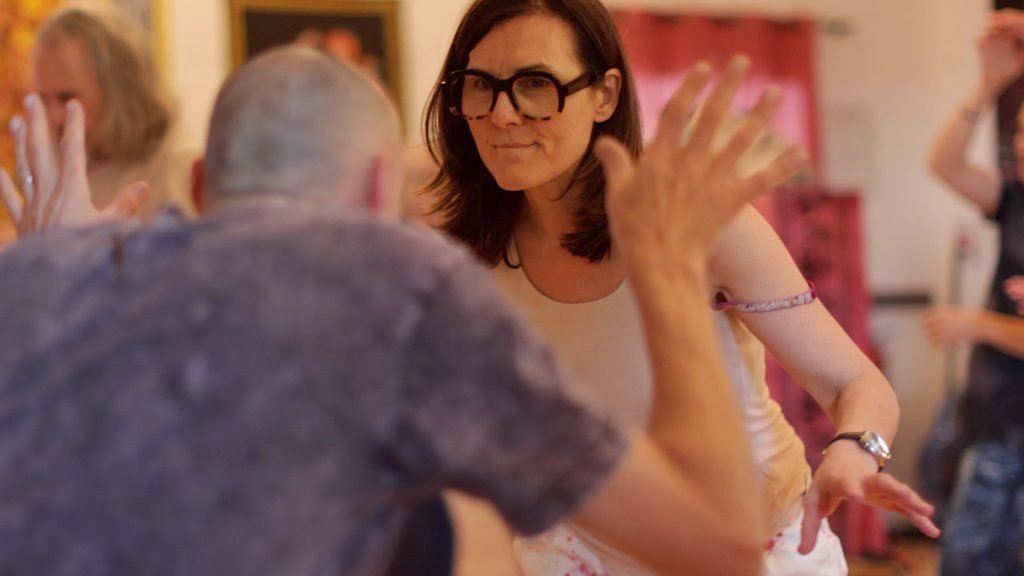
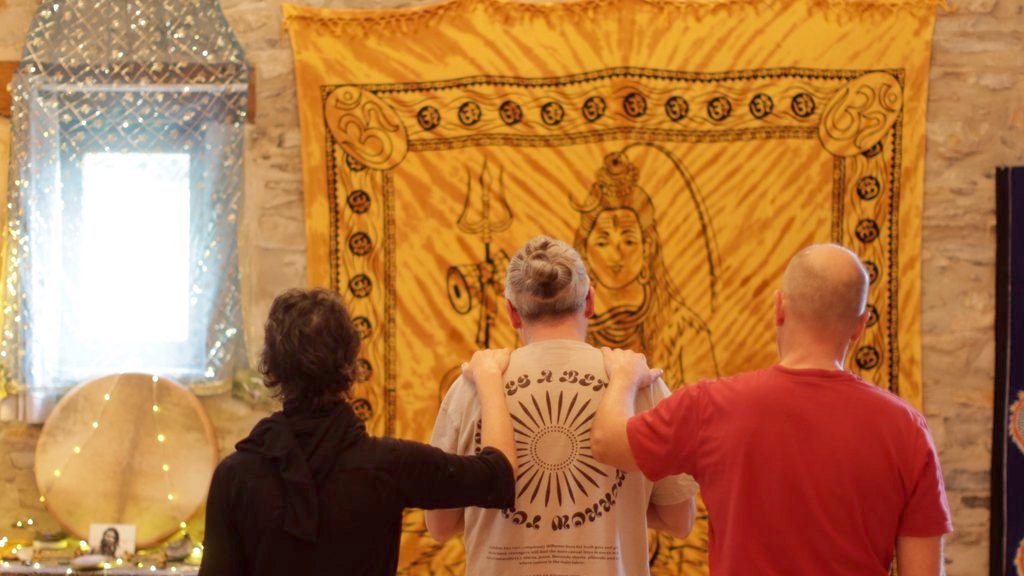

And what if this encounter between oneself and the other were lived fully?
Learning to be ourselves without cutting ourselves off from others, accepting our differences without giving up on our needs, discovering how the relationship can become a space of freedom rather than constant compromise… That’s also what we explore in our internship. Union Sacrée – At the Heart of the Living.
Through Tantra, reliance and sacred geometry, we invite each of us to deepen our presence within ourselves, with others and with life, to discover a way of being in relationship where individuality and connection can nurture each other.
🌿 Discover the Union Sacrée – Au cœur du Vivant internship (May 2027)
- Share